
LOUISE NEVELSON
Bologna, Palazzo Fava
May 30 – July 20, 2025
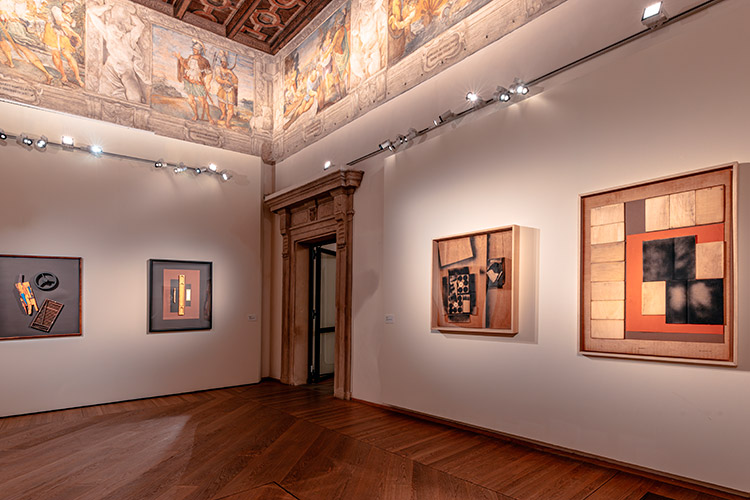
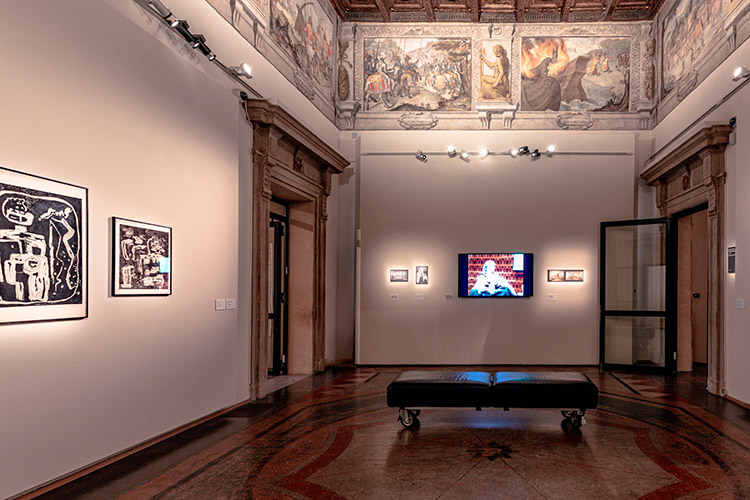
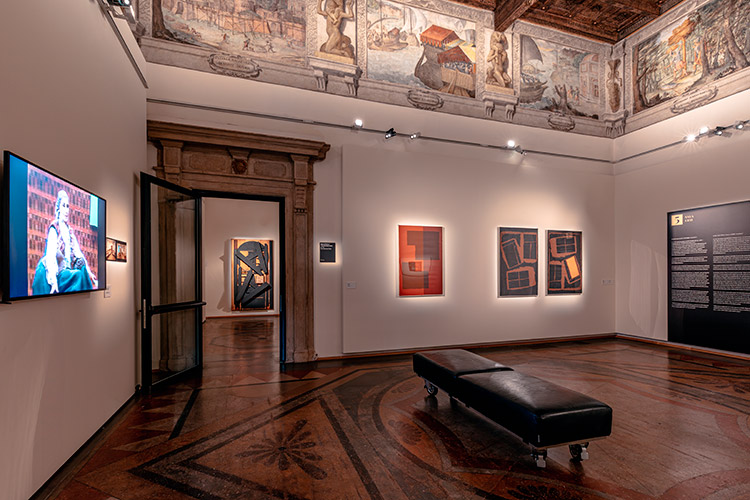
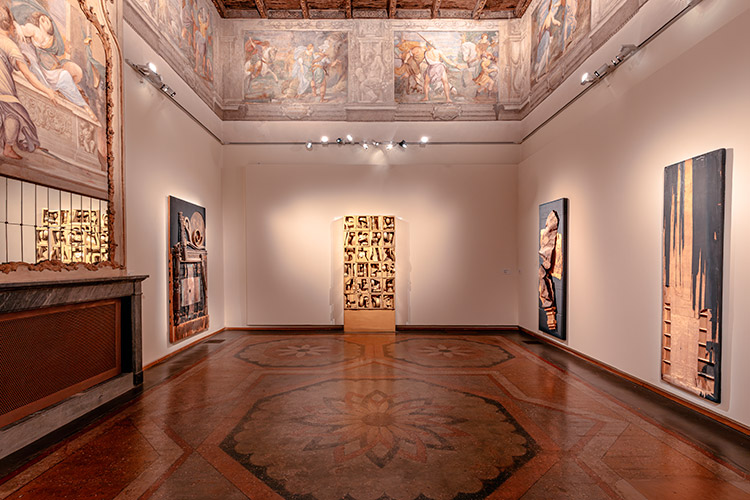
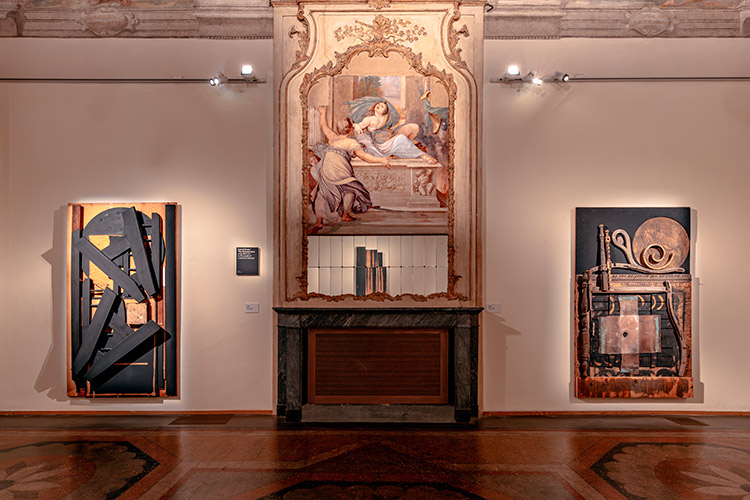
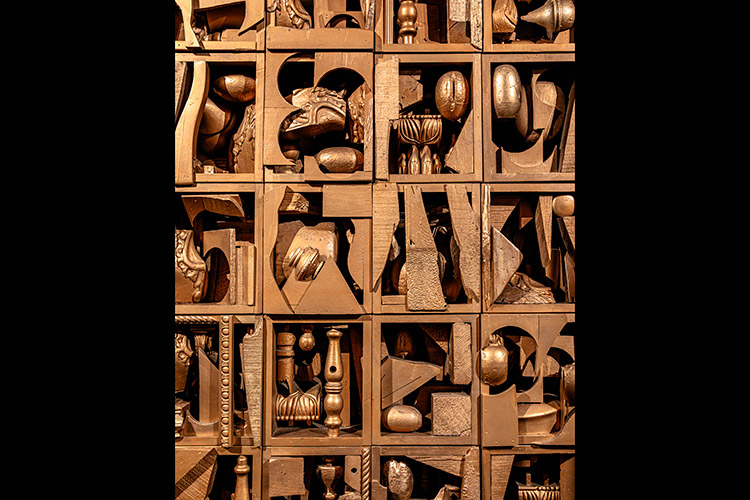
Ph. Stefano Tacchinardi. Courtesy Associazione Genesi
Promoted by Associazione Genesi
in collaboration with Opera Laboratori and Genus Bononiae
Curated by Ilaria Bernardi
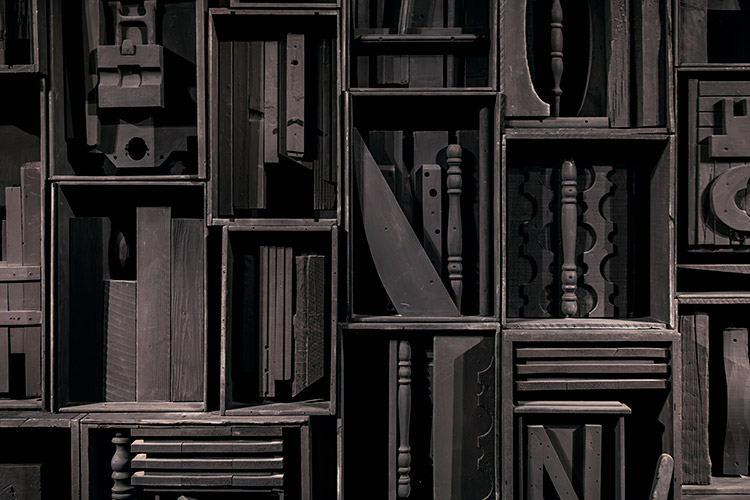
The Associazione Genesi, in collaboration with Opera Laboratori and Genus Bononiae, presents an important exhibition on the work by Louise Nevelson (born Lija Isaakivna Berljavs’ka, Kiev, 1899 – New York, 1988), one of the first women artists to gain firm recognition in the coeval art system, as early as the early 1940s, thanks to her large black, white, and gold monochrome sculptures made through assemblages of waste materials.
This is the first exhibition dedicated to Louise Nevelson in the city of Bologna and, at the same time, corresponds to the 120th anniversary of her move from Kiev, where she was born, to the United States, where she was reunited with her father, who, a few years earlier, had emigrated there to escape the persecutory climate against Jews that had spread in her home country. The move overseas marked a turning point in the life of the very young Louise, since in the United States she found her emancipation as a woman and her success as an artist.
In fact, although married to Charles Nevelson and the mother of a son, Louise Nevelson felt the role of wife and mother so limiting that in 1941 she divorced her husband to devote herself entirely to art. Her tenacity to emancipate herself as a woman and as an artist allowed her to see her works become part of the collections of major American museums, including MoMA in New York, as early as the 1950s; in 1962 she exhibited in the U.S. pavilion of the Venice Biennale, and in 1967 she was given her first major retrospective at the Whitney Museum in New York, which was followed by numerous other exhibitions around the world that earned her the title of “Grande dame of contemporary sculpture.”
As Germano Celant wrote in the monograph edited in 1971, “only by considering her as a woman who repudiated the male cultural tradition in order to produce an authentically feminine art, can one understand the meaning of her work, which does not involve a purely aesthetic operation, but an ideological-behavioral one, lived a good part of her life through all sorts of authentic gestures of concentration on herself as a female, no longer passive in relation to the violence of the dominant sex.”
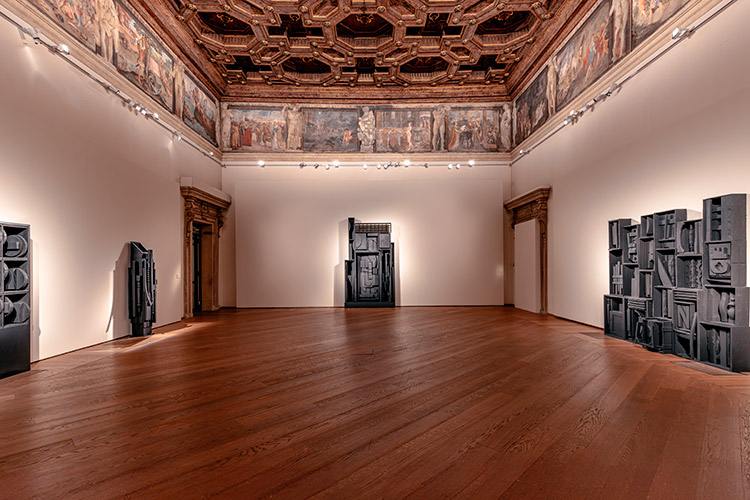
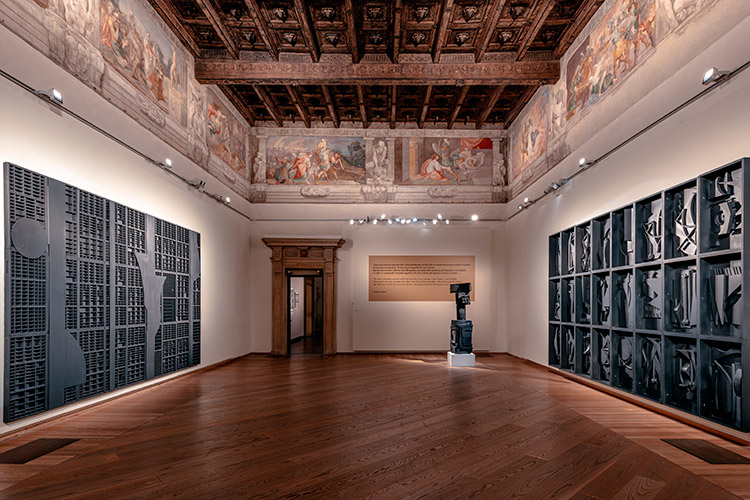
The exhibition, curated by Ilaria Bernardi, takes place in the rooms on the main floor of Palazzo Fava, decorated by the cycle of frescoes that was commissioned in 1584 from Ludovico, Annibale, and Agostino Carracci by the building’s then-owner Filippo Fava.
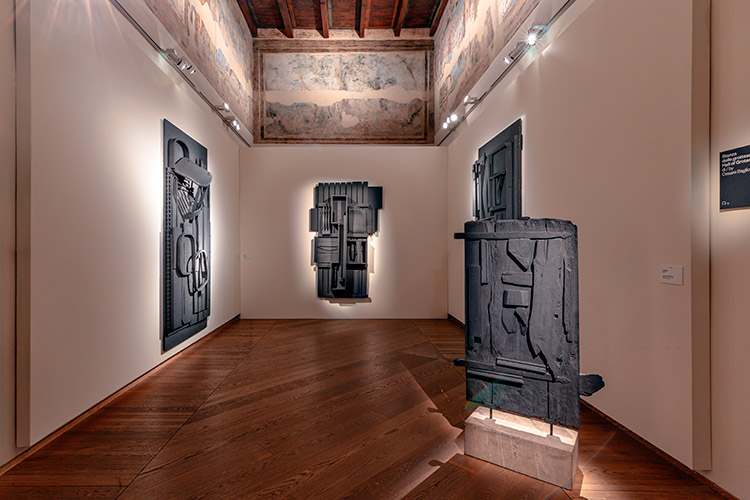
Developing across the five rooms on the main floor of Palazzo Fava, for the first time ever this exhibition divides Louise Nevelson’s works into recurring thematic-structural types, the aim being to emphasize the lexicon on which her work is based and through which her activity as a whole can be interpreted.
At the heart of the exhibition are the iconic large-scale sculptures in painted wood, among which examples from different sculptural cycles produced in the 1950s, 1960s, 1970s and 1980s stand out. All of the works are on loan from the Fondazione Marconi in Milan.
By following the exhibition itinerary indicated in the map below, visitors will be able to witness the different ways in which the artist carries out an “alchemical” process that transforms matter (the scraps she collected and assembled) into Art. At the same time, this process turns the woman who is the artificer of this process into a human being who is independent from men, and her works into the expression of self-asserted femininity.
Thus, this exhibition pays tribute to an artist whose life struggled for the self-assertion and autonomy of women in art and, more generally, in society.